The Dormant Ledger: What Scotland's Woodland Soils Still Hold
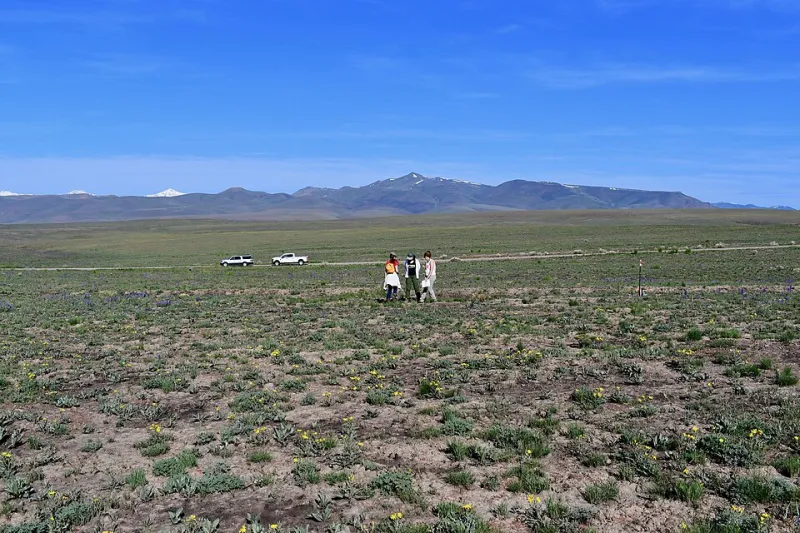
Photo: USFWS Pacific Southwest Region, Public domain, via Wikimedia Commons
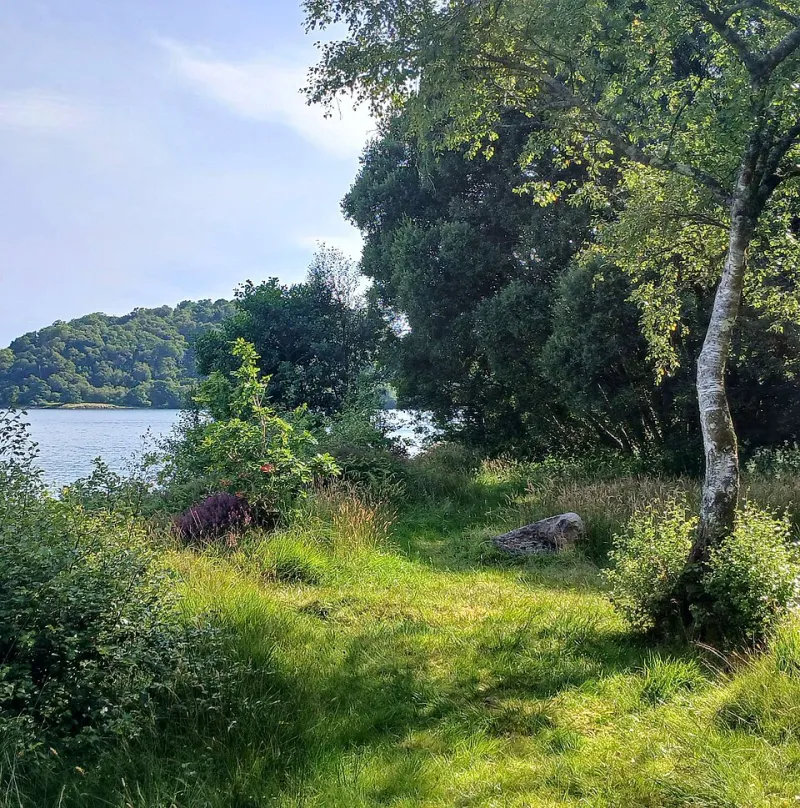
A native wood is often read from the canopy down: oak, birch, rowan, pine, the shifting light beneath them. Yet some of the most consequential material lies below the leaf litter, in the upper soil horizons, where seeds sit in enforced pause. This is the soil seed bank: the reserve of viable seeds present in the soil and litter, capable of germinating when conditions allow. It is sometimes described as a wood's memory. That metaphor is useful, but it needs discipline. A seed bank is not a complete record of the wood as it was, nor a guarantee of what it might become. It is a biased archive, shaped by seed production, burial, decay, disturbance and time.
An archive with uneven holdings
Soil seed banks are formed by seed rain from the vegetation above, by seeds carried in by wind, water, animals and people, and by the slow incorporation of that material into the soil. Once buried, seeds may remain dormant for months, years or, in some species, decades. But persistence is not universal. Many woodland specialists produce relatively few seeds, and those seeds may remain viable for only a short period. Species such as wood anemone and other ancient woodland indicators often rely more on vegetative spread and local dispersal than on long-lived seed reserves. Their presence in a wood is therefore a matter of continuity, not merely of soil memory.
In contrast, seed banks in temperate woods are frequently dominated by pioneers, light-demanders and ruderal species: birch, willow, foxglove, bramble, heather, rushes and sedges, along with grasses and other plants adapted to disturbance. These are the species that can seize an opening in the canopy or a patch of disturbed ground. Their seeds may persist because the conditions that favour them are intermittent. The result is an archive weighted towards the transient and the opportunistic, not necessarily towards the mature woodland flora that a manager may hope to see return.
Dormancy, cues and false dawns
Dormancy is not a single condition. Seeds may be prevented from germinating by a hard seed coat, by immature embryos, by chemical inhibitors or by the physiological state of the seed itself. Many temperate species require a period of chilling, or alternating temperatures, or exposure to light, before germination can begin. Others respond to nitrate pulses, to scarification, or to the changed temperature regime that follows canopy removal. Burial depth matters too: a seed too deep may never receive the light or temperature fluctuation it needs, while a seed brought to the surface may germinate into conditions that are briefly suitable and then fail.
This is why disturbance can produce a flush of growth that looks like restoration but is not. A cleared patch may fill with birch seedlings, willow, foxglove and rushes from the seed bank, while the target woodland herbs remain absent. The seeds have responded to a cue, but the cue has not assembled a community. Managers should distinguish between a germination event and a recovery trajectory. A seed bank can produce a pioneer sward; it cannot, by itself, recreate the full structure and diversity of an old wood.
What Scottish woods remember
The composition of a Scottish woodland seed bank reflects land-use history as much as present vegetation. A wood that was grazed, cultivated, drained or planted with conifers may carry a seed bank shaped by those episodes. Old tracks, charcoal hearths, boundary banks and former fields can leave their signatures in the soil. In some cases the seed bank may remember a more open landscape, or a phase of burning, or a period of heavy browsing, rather than the closed woodland that now stands.
This matters for restoration. In Atlantic oakwoods, pinewoods and birchwoods, the seed bank is often poor in the typical woodland herbs that define ancient sites. It may be richer in species that benefit from disturbance. After the removal of conifers or the relaxation of grazing, natural regeneration may be vigorous but compositionally narrow. Birch and willow can arrive quickly; oak, hazel and ash may depend on seed rain from nearby trees or on planting. Woodland ground flora may be slower still, especially where dispersal is limited and populations are isolated.
The manager's question: restore or reintroduce?
The practical question is not whether the seed bank is good or bad, but what it can reasonably be asked to do. Where target species are already present nearby and dispersal pathways are intact, natural regeneration may be sufficient. Where the seed bank is dominated by pioneers and the target flora is absent, intervention may be necessary. That intervention should be based on evidence: a vegetation survey, a assessment of local seed sources, and, where appropriate, a seed bank assay.
Seed bank testing can be done through soil sampling and glasshouse germination, with seedlings identified as they emerge. The method is informative but not exact. Sampling depth, timing, stratification and handling all influence results, and a single sample is not an audit. DNA-based methods are developing, but they are not yet a routine substitute for careful field observation and germination trials. The most reliable approach combines several lines of evidence: what is growing now, what has grown in the past, what is arriving from nearby, and what the soil can still produce.
A partial memory, used well
The soil seed bank is best understood as a set of possibilities rather than a promise. It can support recovery after disturbance, and it can reveal something of a wood's history. It can also mislead if it is treated as a complete backup of former woodland. For managers, the sensible course is to protect the soil, retain leaf litter and undisturbed horizons where possible, avoid unnecessary deep cultivation, and allow natural regeneration where it is likely to succeed. Where it is not, reintroduction of locally appropriate species may be justified, provided it is done with attention to provenance, biosecurity and long-term monitoring.
The wood in waiting is not a warehouse of former glories. It is a living, uneven ledger of what has arrived, what has persisted and what has been lost. Read carefully, it can inform decisions. Read too literally, it can flatter a site into expecting more than its soil can deliver.