The Drenched Wood: How to Read Scotland's Temperate Rainforest
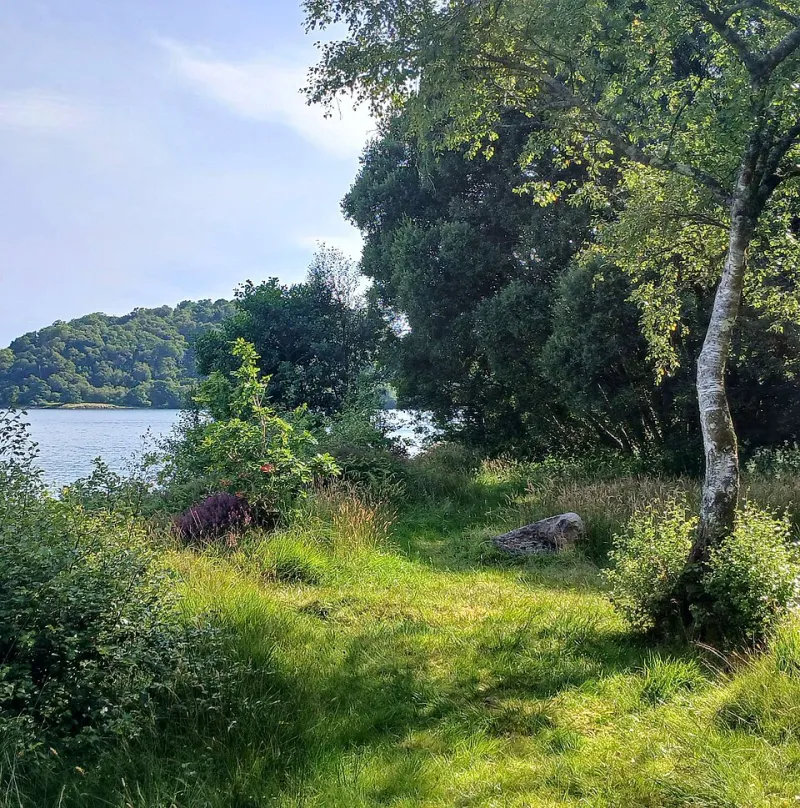
Photo: Rowyn flowerdew, CC0, via Wikimedia Commons
Scotland is not usually associated with rainforest. Yet along the west coast, in glens where rain arrives on most days and the air stays soft with moisture, there are woods that belong to a globally uncommon habitat: temperate rainforest. These are not tropical forests. They are low, humid, moss-hung woodlands of oak, birch, hazel and rowan, shaped less by great heat than by constant wetness, clean air and deep time.
The Atlantic oakwoods of western Scotland are among the best examples of this habitat in Europe. They are often small, scattered and embedded in a wider mosaic of open ground, bog, bracken and coastline. Their importance lies not in grandeur but in continuity: ancient trees, undisturbed soils, abundant deadwood and an extraordinary community of lichens, mosses and liverworts that depend on stable humidity and low pollution. For Coille Alba, these woods are a test case for how science, careful management and public understanding meet in one of Scotland's most fragile landscapes.
What Makes a Wood Hyper-Oceanic?
Hyper-oceanic is a useful term because it describes climate rather than scenery. These woods sit in places with high rainfall, frequent cloud cover, strong maritime influence and relatively mild winters. Humidity is the key. Many of the species that define the habitat do not draw their water from soil alone; they absorb moisture from the air, from mist and from rain running down bark. Clean air matters just as much. Sulphur dioxide and nitrogen pollution can alter lichen communities long before a wood looks damaged to the casual eye.
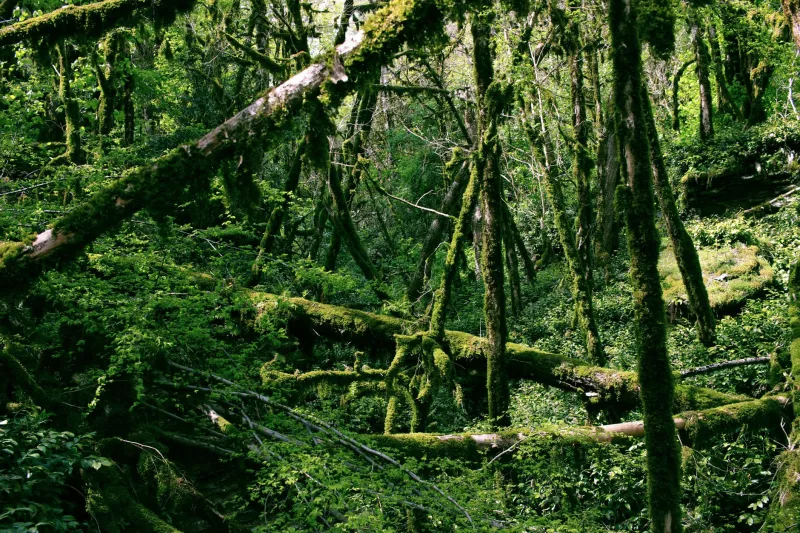
The result is a woodland with a distinct architecture. Trunks are often short and mossy. Branches carry lichens that hang like grey-green lace. Ferns gather in damp hollows. The ground may be a tangle of moss, liverwort and fallen wood rather than a tidy carpet. This is not neglect. It is the physical expression of a climate in which decomposition, growth and moisture are finely balanced.
Reading the Signs
A genuinely functioning rainforest wood can be read in layers. Start with the trunks. Look for large foliose lichens such as tree lungwort, with its lobed, map-like thallus, and for the beard lichens that depend on humid air. On the west coast, filmy ferns and mosses may coat rocks and lower trunks in green felt. Liverworts can be extraordinarily diverse, especially where water seeps and humidity holds.
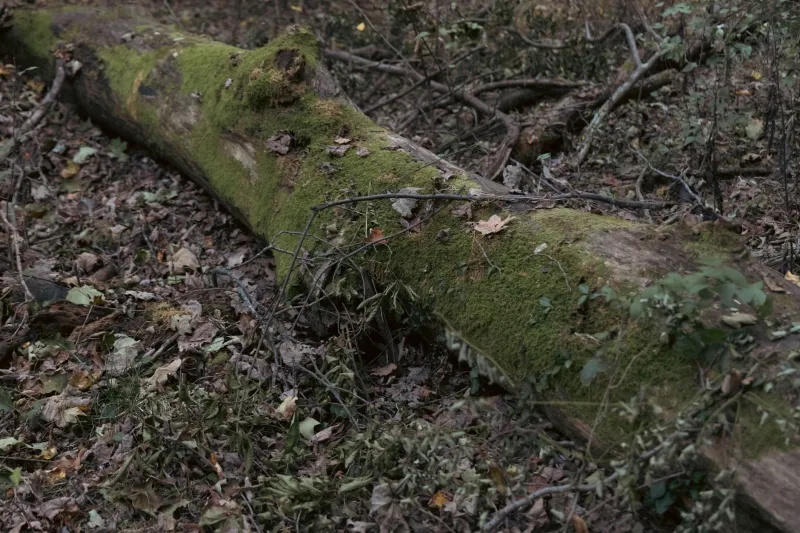
Then look at structure. Ancient and veteran trees matter, but so do younger trees and shrubs. A wood that regenerates has a future; a wood without young native trees is slowly closing its account. Deadwood is another sign of health. Standing dead trunks, fallen logs and decaying branches support fungi, invertebrates and the moist microhabitats that many rainforest species require.
Finally, read the edges and the ground. Dense Rhododendron ponticum casts deep shade and spreads relentlessly, suppressing native regeneration and altering soil and fungal communities. Heavy grazing by deer or sheep can remove the next generation of trees before it grows above browsing height. Fragmentation makes every other pressure worse, because small woods lose humidity at their edges and species cannot easily move between patches.
The Pressures on a Fragile Habitat
The threats to Scotland's Atlantic oakwoods are well documented and stubbornly practical. Overgrazing is perhaps the most widespread. Where browsing pressure is high, oak, birch, hazel and rowan seedlings are eaten back, leaving old trees with no successors. Invasive rhododendron is another major concern, especially in the west, where it can dominate understoreys and spread into open ground. Nitrogen deposition, much of it from agriculture and transport, enriches soils and encourages competitive plants at the expense of the low-nutrient communities that rainforest lichens and bryophytes favour.
Fragmentation compounds these problems. Many rainforest woods survive as isolated pockets rather than as connected landscapes. Small size makes them vulnerable to edge effects, storm damage and local extinction. Climate change adds uncertainty, particularly around rainfall patterns and drought stress, but the immediate priorities remain grazing, invasive species, pollution and habitat connectivity.
What Recovery Realistically Looks Like
Recovery is not a single project with a finish date. It is a long adjustment. In the first years, the work may look unspectacular: fencing to control grazing, careful rhododendron removal, monitoring of regeneration, retention of deadwood and protection of wet hollows. Later, the signs accumulate. Seedlings appear above the browse line. Moss and lichen communities begin to spread. A wood that was once a static remnant starts to behave like a living system again.
For visitors, the most useful contribution is restraint. Stay on paths where they exist, keep dogs under control, avoid touching fragile epiphytes and do not pick lichens or mosses. For land managers, the priorities are equally clear: assess grazing pressure honestly, treat invasive rhododendron as a long-term programme rather than a one-off task, retain deadwood and veteran trees, buffer woodland edges and monitor the species that indicate whether the wood is truly functioning.
The rainforests of western Scotland are not a tropical spectacle. They are quiet, damp and easily overlooked. But they are among the most distinctive woodlands in Europe, and their future depends on reading them accurately: not as scenery, but as a living climate archive that still has time to recover.