The Unseen Reservoir: Bryophytes and the Water Budget of a Scottish Wood
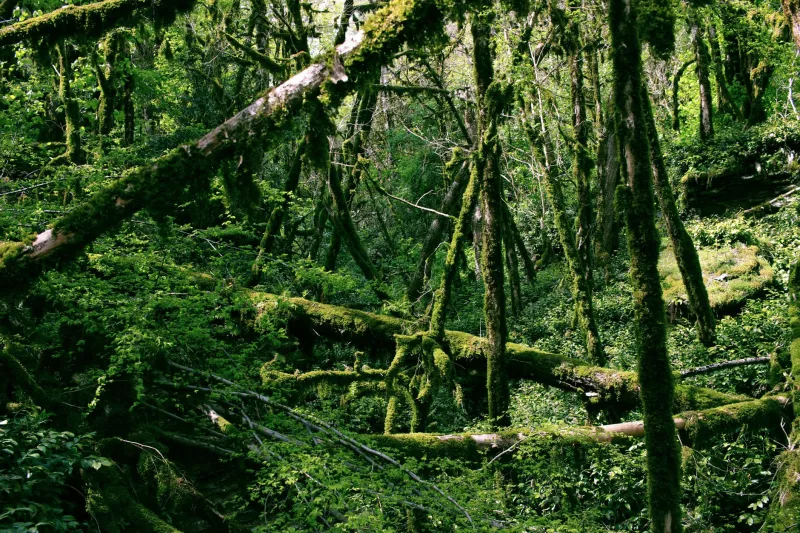
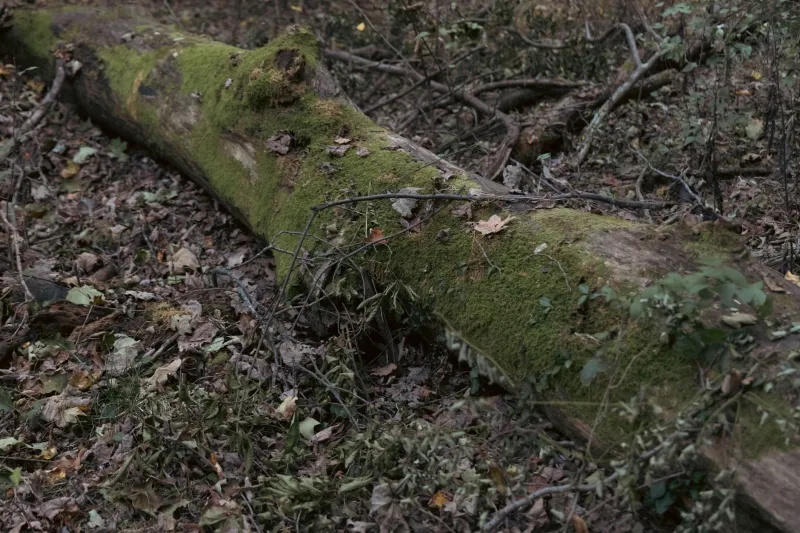
Walk into an old oakwood in Argyll after rain and the eye is drawn upward: trunks, branches, the shifting canopy. The ground, meanwhile, is doing quiet work. Mosses and liverworts coat stones, roots, fallen logs and banks in a layer that can look merely decorative. In a native Scottish wood, however, that layer is part of the water economy. It intercepts rain, slows its passage to the soil, holds humidity close to the ground and helps the wood endure the dry spells that interrupt even Scotland’s wetter months.
A layer built to lose water and regain it
Bryophytes — mosses, liverworts and hornworts — lack the waxy cuticle and root systems of vascular plants. Most absorb water directly across their surfaces, and many can dry to a crisp and later rehydrate without lasting damage. This poikilohydric habit is easy to overlook because it does not fit the familiar model of a plant drawing water from soil through roots. A moss cushion is better understood as a small, living sponge with a structure.
That structure matters. Dense cushions, wefts and mats create boundary layers of still, humid air. Tall feather mosses and sprawling pleurocarpous species can hold films of water among stems and leaves; leafy liverworts in damp ravines do similar work at a finer scale. The result is not a reservoir on the scale of a peat bog or a soil profile, but a strategically placed one. It sits where rain first meets the woodland floor, and where evaporation and temperature are moderated by shade.
From canopy to carpet
Rainfall reaching a wood is already partitioned by the canopy. Some is intercepted by leaves and branches and evaporates; some runs down stems as stemflow; the rest arrives as throughfall. The bryophyte layer receives this uneven supply and alters what happens next. Water clings to moss surfaces, fills the spaces within cushions and is released gradually to the soil and leaf litter. In doing so, the layer smooths the arrival of water after heavy rain and keeps the immediate microclimate damper for longer afterwards.
The effect is local, but local effects accumulate. A woodland floor with a continuous moss cover behaves differently from one that has been poached, drained or stripped by heavy browsing and machinery. The difference is most obvious in dry periods. The dry summer of 2022 reminded many woodland managers that shade and ground cover are not aesthetic extras; they are part of a wood’s capacity to buffer stress. Bryophytes do not prevent drought, but they help retain the humid conditions on which many woodland species depend.
What the carpet says about the wood
Bryophytes are also diagnostic. Because they absorb water and nutrients largely through their surfaces, they respond closely to air quality and deposition. Historical sulphur pollution simplified bryophyte communities across parts of industrial Britain; nitrogen deposition now favours aggressive, nutrient-loving species and can disadvantage slower-growing specialists. A moss layer that has become uniformly rank or unusually sparse may be telling a story about pollution, drainage or disturbance rather than simple age.
Woodland continuity matters too. Scotland’s oceanic climate supports internationally important assemblages of Atlantic bryophytes, particularly in western oakwoods, hazel woods, ravines and stream corridors. Many of these species are poor dispersers and depend on stable, humid microclimates, old coppice stools, boulders and shady banks. Their presence is not proof of ancient status on its own, but a rich bryophyte flora can be a useful clue when read alongside historical records, stand structure and other indicator groups.
Reading the moss layer
For the field observer, bryophytes reward close attention. A hand lens is essential. Growth form is a practical first step: neat cushions, feathery wefts, flat mats, trailing strands. Common woodland mosses such as Rhytidiadelphus loreus, Hylocomium splendens and Thuidium tamariscinum can dominate the floor of damp native woods, while Sphagnum species signal wet hollows and flushing. Liverworts require more care, but species of Plagiochila and Frullania on trunks and rocks are familiar starting points in western woods.
Identification should be treated as a route into ecology, not an end in itself. Note where the plant is growing, how wet the substrate remains, whether the site is shaded or exposed, and whether the surrounding wood is grazed, drained or continuous with older habitat. A species list without that context is thin evidence. A repeated observation — the same bank becoming drier, the same cushion colonised by nutrient-loving species — is more useful.
A conservation argument for small plants
For Coille Alba, the practical point is straightforward. Woodland conservation in Scotland cannot be reduced to trees alone. The bryophyte layer is part of the habitat: it moderates moisture, provides cover for invertebrates, influences seedling microsites and records the wood’s chemical and hydrological history. Management that protects shade, blocks drainage, avoids unnecessary disturbance and reduces excessive browsing pressure tends to protect bryophytes as well.
None of this requires treating every moss cushion as fragile. Bryophytes are resilient in the right conditions, and some are quick to colonise disturbed ground. The concern is the loss of the specialists and the simplification of the layer as a whole. A wood without its mosses is not simply less green. It has lost a small but meaningful buffer in the way it handles water, and a sensitive instrument for reading the health of the place.