After the Photograph: A Three-Winter Audit for Scotland's New Native Woods

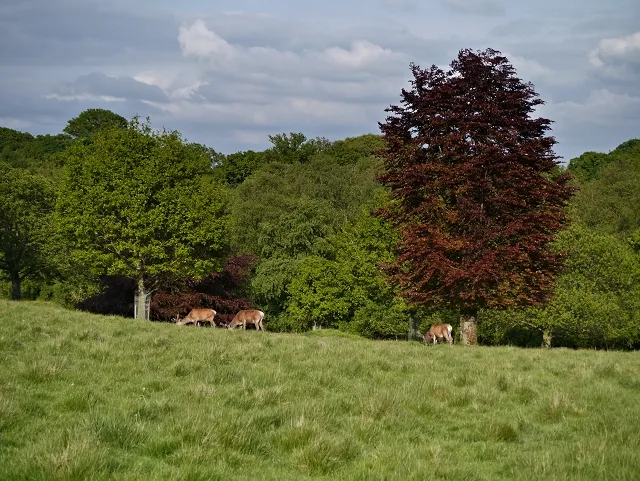
Photo: Creator:William Wellings, CC0, via Wikimedia Commons
Every new native wood begins with a hopeful image: a line of small trees, a group of volunteers, a spade in the soil. The photograph is taken, the figures are counted, and the project is declared planted. But a wood is not made on planting day. It is made, or unmade, in the winters that follow.
As the 2026 planting season gets underway across Scotland, it is worth looking beyond the tally of saplings. The first three winters are the period when a new native wood is most vulnerable and most instructive. They reveal whether the site was prepared with care, whether the stock is suited to the ground, whether herbivore pressure was properly anticipated, and whether anyone has budgeted for the quiet work of aftercare. A planting scheme can look successful in March and be a failure by the following autumn. A modest scheme with good aftercare can become a wood.
Before the first spade
The audit begins before planting. Site preparation is not simply about clearing ground. It is about understanding the soil, the drainage, the existing vegetation and the seed bank. A wet hollow that suits alder and willow will not suit oak. A shallow, exposed slope may need a different mix from a sheltered glen. Native woodland creation works best when the species mix follows the site rather than the other way round.
Provenance matters too. Local origin is often preferred for native woods, but the climate is changing, and the choice of stock is not always straightforward. Nursery quality, root health and handling before planting can matter as much as the label on the bag. Poorly stored or badly planted stock may survive the first summer and fail in the second. Good planting technique, with the root collar at the right depth and the soil firmed without compaction, is a modest skill that repays attention.
Herbivore pressure should be assessed before the first tree goes in. Deer, rabbits, hares and voles can all affect survival, and the risk varies by site and season. Fencing, individual guards or a combination of both may be appropriate, but protection must be matched to the pressure. A fence that is too short, poorly tensioned or badly sited is an expensive gesture. A guard that is not checked can become a trap or a shade. The audit question is not simply whether protection was installed, but whether it will still be working in three years.
The first winter: establishment
The first winter is about survival. Check that trees are firm in the ground after frost and wind. Look for damage from browsing, bark stripping or vole girdling. Inspect guards and fences after storms. Control competing vegetation around the base of young trees, especially aggressive grasses, bracken or bramble, but avoid creating bare ground that invites erosion or frost heave.
Record what you see. A simple map of planting blocks, species and protection, with notes on survival and damage, is more useful than memory. Photographs taken from fixed points can reveal changes that are hard to see from day to day. The first winter is also the time to replace failures, but only after asking why they failed. Replanting into the same problem without diagnosis is an expensive repeat.
The second winter: pressure and competition
By the second winter, the wood is beginning to show its character. Some species will have escaped the worst of the browsing; others will be repeatedly nipped. Leader growth is a useful indicator. So is the presence of natural regeneration from nearby seed sources. If birch or rowan seedlings are appearing unaided, that is a good sign. If they are being browsed to the ground, the pressure may be too high.
Weed control remains important, but it should be targeted. Rank grass can smother small trees, while dense bracken can shade them out. Careful cutting or mulching around the base can release growth without damaging roots. Fences and guards need another inspection. Voles can be active under snow, and deer may test fence lines when alternative forage is scarce. The second winter is also the time to review the budget for aftercare. If the money ran out after planting, the wood is now running on hope.
The third winter: the make-or-break year
The third winter is often when the direction of a new wood becomes clear. Saplings that have grown well may be above the browse line or able to withstand light browsing. Others may still be vulnerable. The shrub layer may be developing, or it may be absent. The ground flora may be changing. This is the point at which a decision may be needed: to interplant, to adjust protection, to reduce or increase management, or to accept that part of the site is better suited to a different approach.
Long-term monitoring matters more than a single successful planting day. Permanent plots, fixed photographs, simple survival and height records, and notes on browsing and vegetation can all be gathered without specialist equipment. What matters is consistency. A wood that is monitored every few years can be managed adaptively. A wood that is counted once and then forgotten is a gamble.
An audit for aftercare
A practical three-winter audit might ask the following. Was the site matched to the species mix? Is the provenance appropriate and the stock healthy? Was planting depth and firmness checked? Are fences, guards and tree shelters intact and fit for purpose? Is browsing pressure being monitored rather than assumed? Is competing vegetation controlled around young trees without damaging them? Are failures being replaced with a clear diagnosis? Is there a budget and a person responsible for aftercare? Are records being kept in a form that can be used in five years' time?
These questions are not glamorous, but they are the difference between a woodland creation scheme and a wood. They also help to manage expectations. Not every site will become a dense canopy of oak and birch. Some will be open, scrubby and slow. That is not necessarily failure. A native wood is a process as much as a product, and the first three winters are the beginning of that process.
Beyond the planting day
Scotland needs more native woodland, and it needs it to survive. The 2026 planting season will produce many photographs and many figures. The more important test will come in the quiet winters that follow, when the cameras have gone and the saplings are on their own. A wood that is planned for three winters, and monitored for thirty years, is a better investment than one that is celebrated for a single day.