The Browsing Line: Deer, Density and the Future of Scotland's Native Woods
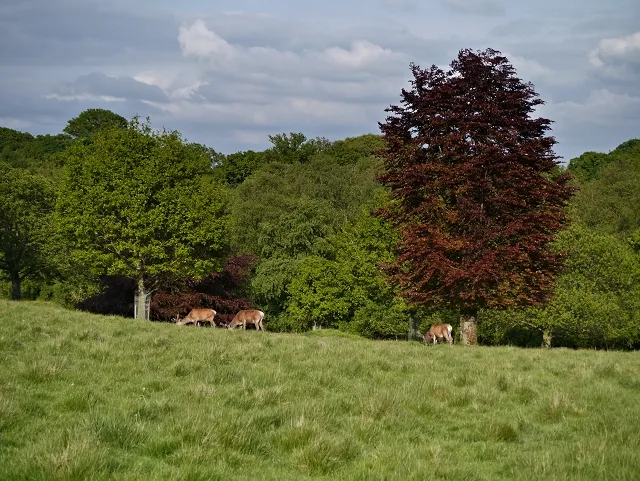
Photo: David Dixon , CC BY-SA 2.0, via Wikimedia Commons
In a native wood, the most important event of the year may be a quiet one: the moment a deer closes its teeth around the leading shoot of an oak seedling. It leaves no dramatic scar and no obvious record, yet repeated many times across a season it can decide whether a wood renews itself or slowly loses the next generation. In Scotland, where native woodland cover is small and fragmented, that quiet event has become one of the most consequential forces in conservation.
Deer are not intruders in this story. Red deer, roe deer and, in some places, sika are part of the faunal heritage of these islands. Low or moderate browsing can maintain open glades, check rank growth and create structural variety that benefits insects, birds and plants. The difficulty begins when browsing pressure exceeds what the wood can absorb. At that point the browsing line becomes visible: a height below which leaves and shoots are repeatedly removed, and above which the canopy continues largely untouched.
Reading the browsing line
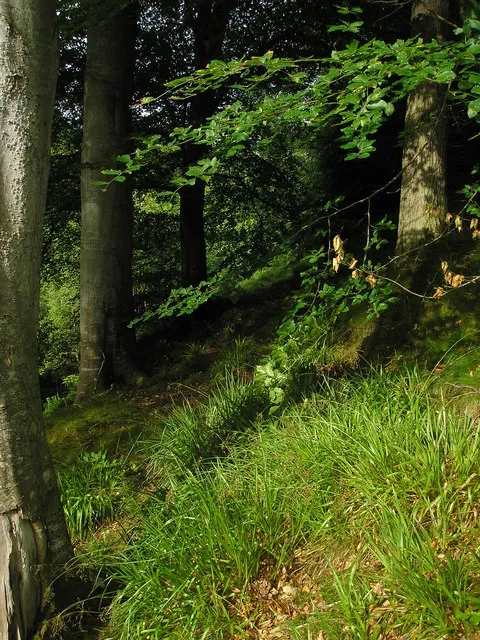
A browsing line is not a perfect diagnostic tool, but it is a useful one. In a wood under heavy pressure, palatable shrubs may be stripped to a uniform height, bramble may be scarce, and tree seedlings may be present only as short, repeatedly nipped stems. In a wood under lighter pressure, seedlings of different heights survive alongside taller saplings and a more layered shrub flora. The difference is not simply about how many deer are present. It is about what else they have to eat, how large the wood is, how sheltered it is, and whether the surrounding landscape offers alternative forage.
This is why deer density alone can mislead. A relatively high density in a large, diverse landscape may have less impact than a lower density in a small, isolated wood where the same animals return to the same palatable regrowth. Roe deer are territorial and browse selectively; red deer move more widely and can exert pressure across a whole hillside; sika complicate the picture further in parts of western and central Scotland. The science of herbivore impact is therefore less about a single number and more about indicators: the proportion of shoots browsed, the height growth of saplings, the cover of shrubs, and the presence of sensitive species.
Fenced and unfenced: two kinds of evidence
Much of what we know about deer browsing in Scottish woods comes from fences. Exclosures allow us to see what vegetation does when herbivores are excluded. Inside a fence, seedlings may suddenly appear, tall herbs may flower, and shrub layers may thicken. These plots are valuable because they reveal potential. They show what a site could support if browsing pressure were reduced.
But fences are not a neutral window on nature. They alter shelter, cast shade, create edges and require maintenance. They can also concentrate grazing pressure outside the fence line, and they may interrupt the movement of other animals. A fenced exclosure is an experiment as much as a management tool. Unfenced regeneration, by contrast, shows what is possible in the real landscape, with deer present and with all the other pressures that a wood faces. The most useful evidence often comes from paired sites: fenced and unfenced areas monitored over years, not just seasons.
In practice, many native woodland expansion schemes in Scotland use fencing as a temporary measure. The intention is to give saplings a head start, not to exclude deer forever. Where deer management is effective, fences may be removed once the wood is tall enough to withstand browsing. Where it is not, fences can become permanent features, expensive to maintain and difficult to justify as natural regeneration.
What the science suggests about density
The search for a universal deer density threshold has been long and inconclusive, and for good reason. Woodland structure, soil fertility, climate, alternative forage and predator absence all shape the outcome. A density that allows birch and rowan to escape in one glen may be too high for oak or hazel in another. The more practical approach is to monitor the wood itself: the height and form of saplings, the diversity of the shrub layer, the presence of browse-sensitive plants, and the proportion of shoots being taken.
NatureScot and Scottish Forestry guidance has increasingly moved in this direction, emphasising herbivore impact assessment rather than density alone. Deer management groups, landowners and conservation bodies now have access to a range of survey methods, from simple browse transects to more detailed woodland condition assessments. The picture that emerges is rarely simple. Some woods are heavily browsed; others are not. Some species are resilient; others are not. And the impact can change markedly from one winter to the next.
Three levers, no easy answer
Fencing, culling and natural regeneration are often presented as competing solutions. In reality they are tools with different strengths and different costs. Fencing can be highly effective in the short term, particularly for new planting or for protecting vulnerable species. It is also expensive, visually intrusive in some landscapes, and dependent on good maintenance. A fence that is not checked after storms or snow can fail precisely when it is needed most.
Culling is necessary where deer numbers are too high for the wood to regenerate. It is also a subject of genuine public concern, and it must be carried out to high welfare standards. Effective culling requires long-term commitment, reliable monitoring and a functioning venison market or carcass disposal route. It is not a one-off intervention. Natural regeneration is the cheapest and most ecologically continuous option where deer pressure is already low and a seed source is present. But it is slow, vulnerable and difficult to rely on in fragmented woods where browsing pressure is concentrated.
The trade-offs are real. A fence may protect a wood for twenty years but do little to address the wider deer population. A culling programme may reduce pressure across a landscape but requires patience and social licence. Natural regeneration may produce the most natural structure but only if the conditions allow it. None of these approaches is a complete answer on its own.
A landscape of choices
The deer divide is not a simple story of villains and victims. It is a question about balance, scale and time. Deer belong in Scotland's woods, but so do the seedlings that will become the next generation of trees. The task is to decide, wood by wood and landscape by landscape, what level of browsing is acceptable and how best to achieve it. That requires monitoring, honesty about costs, and a willingness to adapt as conditions change.
As Scotland pursues ambitious targets for woodland expansion and biodiversity recovery in 2026, the browsing line is a quiet test of long-term thinking. A wood that cannot regenerate is a wood that is slowly closing its own future. The answer is not to remove deer from the story, but to manage the story so that both deer and trees have a place in it.