Moving Trees North: The Uneasy Case for Assisted Migration in Scotland
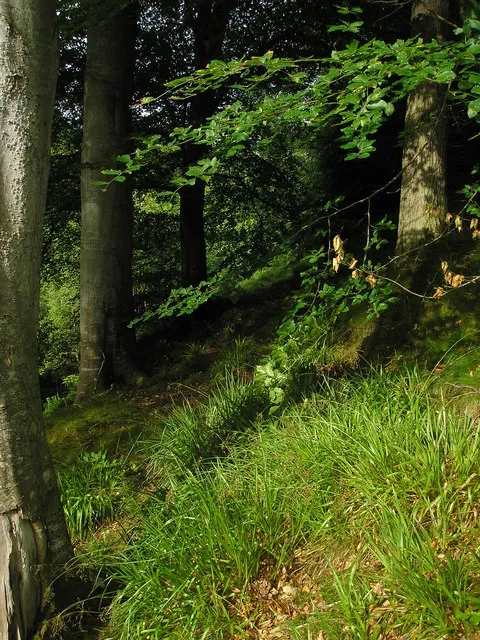
Photo: Iain Lees, CC BY-SA 2.0, via Wikimedia Commons
A question of pace
Assisted migration is a deceptively simple idea. If the climate is moving, why not help the trees move with it? For Scotland, the question is sharp because native woodland cover is fragmented and many woods are small. Trees cannot walk. Seed dispersal across open ground, plantations and roads is slow, often measured in centuries for species such as oak. Climate change is measured in decades. The gap between those two speeds is the heart of the debate.
The term covers more than one practice. Assisted colonisation means moving a species beyond its current range. Assisted gene flow means moving genetic material from warmer parts of a species’ existing range into cooler areas. Most serious proposals for Scotland are cautious. They do not involve replacing native woods with exotic species. They involve testing southern-adapted provenances of native trees such as oak, birch, hazel and rowan, and perhaps assisting a small number of species northwards where natural spread is implausible.
What provenance trials can tell us
Provenance trials are among the best guides we have. Trees of the same species, collected from different parts of its range, are grown together under common conditions. The results show that local provenance is often well adapted to local climate and soils. That is not surprising. But local adaptation is not the same as future-proofing. Southern provenances can grow faster and may be better suited to warmer conditions, yet they can also flush earlier and risk damage from late frost. In Scotland, late frosts and short growing seasons still matter.
Long-term trials by Forest Research and partners have shown that variation within species is considerable. There is rarely a single best provenance. Performance depends on site, soil, rainfall and the particular year. The evidence supports cautious use of more southerly material on some sites, especially where the aim is to maintain woodland cover under future conditions. It does not support wholesale replacement of local seed sources.
Trials also have limits. A plot is not a wood. It cannot test the full community of fungi, insects, lichens, mosses and herbivores that make a native woodland. A tree that grows well in a trial may still disrupt the ecological relationships around it.
The case for action
Scotland’s native woodland is a small fraction of land cover, and much of it survives in fragments. Many woods are isolated by open ground, conifer plantations, roads and development. Natural migration may be too slow to keep pace with the climate envelopes of native species. If suitable conditions shift north and uphill, some species may run out of space.
For long-lived trees, decisions made now shape woods for centuries. A wait-and-see approach is itself a choice, and it may leave future woodland managers with fewer options. Assisted migration could help maintain canopy cover, carbon storage, shelter and habitat. It could also preserve genetic diversity that might otherwise be lost as small populations decline. For a country with so little native woodland left, there is a reasonable argument for giving the remaining woods a helping hand.
The case for restraint
Ancient woods are not simply collections of trees. Their value lies in continuity: soils, deadwood, fungal networks, lichen communities and the intricate relationships that have developed over centuries. Moving trees into such woods could introduce pests or pathogens, alter bark chemistry, change shade and disturb co-evolved communities. The risk is not hypothetical. Tree diseases have repeatedly shown how quickly movement of plant material can spread problems.
There are genetic concerns too. Local populations may hold adaptations we do not fully understand. Introducing southern genes could swamp local variants, and the outcome may be uncertain if future climate is not a simple warming trend. The precautionary principle has real force here. When the ecological consequences are hard to predict, the safer course is often to protect what exists and allow natural selection to act.
There is also a cultural dimension. Scotland’s native woods are valued for their wildness and their sense of place. A wood that is subtly reconstituted with distant provenances may still look like a wood, but its meaning and ecology may have shifted in ways that are difficult to reverse.
A sequenced approach, not a binary choice
The debate is often framed as movement versus restraint. That is too simple. A more defensible position is a sequence. First, protect and expand existing native woods. Reduce grazing pressure, manage deer, retain seed trees, connect fragments and allow natural regeneration where it can succeed. Second, use assisted migration in carefully designed trials on degraded or plantation sites, not in ancient woodland. Keep the trials small, reversible and monitored. Third, only where the evidence supports it, consider wider use.
The phrase right tree, right place should become right tree, right place, right provenance, right time. That is less memorable, but it is more honest. Reasonable people will disagree about how fast to move. Some will argue that the climate emergency justifies bold action. Others will argue that the risks to ancient woods are too great. Both positions deserve a hearing.
Coille Alba’s own view is one of science-led humility. Scotland’s native woodlands need protection first, because no assisted migration programme can recreate an ancient wood. But protection alone may not be enough. A cautious, transparent and well-monitored programme of trials offers a way to learn without gambling the irreplaceable. The woods need both defence and options.