The Standing Exception: Ash Dieback and Scotland’s Search for Tolerant Trees
The first sign is often a thinning crown. By late autumn, an ash wood that should be closing down quietly for winter can look prematurely bare, its finer branches blackened and its trunk marked by lesions that weep where the bark has failed. Ash dieback has become part of the visual grammar of many Scottish woods. Yet in almost every affected stand there are exceptions: trees that are not untouched, but which decline far more slowly than their neighbours. These standing exceptions are now the focus of some of the most patient and consequential work in native woodland conservation.
A disease that reshapes a wood
Ash dieback is caused by the fungus Hymenoscyphus fraxineus. Its life cycle is well suited to a damp, wooded landscape. In summer, small fruiting bodies form on fallen ash leaf rachises, releasing spores that are carried on the wind. Infection often begins in the leaves and shoots, then advances into twigs and branches. Over time, lesions can girdle stems, and infection at the collar can kill the tree outright. In Scotland, the disease has been recorded across many of the ash woods that sit on richer, base-rich soils, from the Borders to Argyll and the upland fringes.
The ecological concern is not simply the loss of one tree species. Ash is a generous tree in a wood. Its light canopy allows flowers, mosses and young regeneration to persist beneath it; its bark and deadwood support lichens, bryophytes and invertebrates; its seeds feed birds and small mammals. Upland mixed ashwoods and lowland ash-dominated stands are recognised as habitats of high value. When ash declines, the wood does not become empty, but it becomes different. Gaps open, light changes, and the balance of species shifts.
What tolerance actually means
The word tolerance is used carefully in plant pathology. A tolerant tree is not immune. It may still become infected, and it may still show symptoms. What distinguishes it is the rate and severity of decline. In ash dieback, a small minority of trees show much slower crown dieback, more limited lesions, and greater survival over repeated seasons. Some may be described as resistant, but tolerance is the more cautious and often more accurate term.
This variation appears to have a genetic basis, though it is not a single switch. Ash is an outcrossing species with high genetic diversity, and tolerance is likely to be shaped by many genes, each contributing a small effect. That makes breeding possible, but slow. It also means that a healthy-looking tree is not automatically a tolerant one. It may have escaped infection, grown in a less favourable microclimate, or be carrying a latent infection that has not yet expressed. Distinguishing a genuine survivor from a lucky one requires repeated assessment, not a single visit.
The work of watching survivors
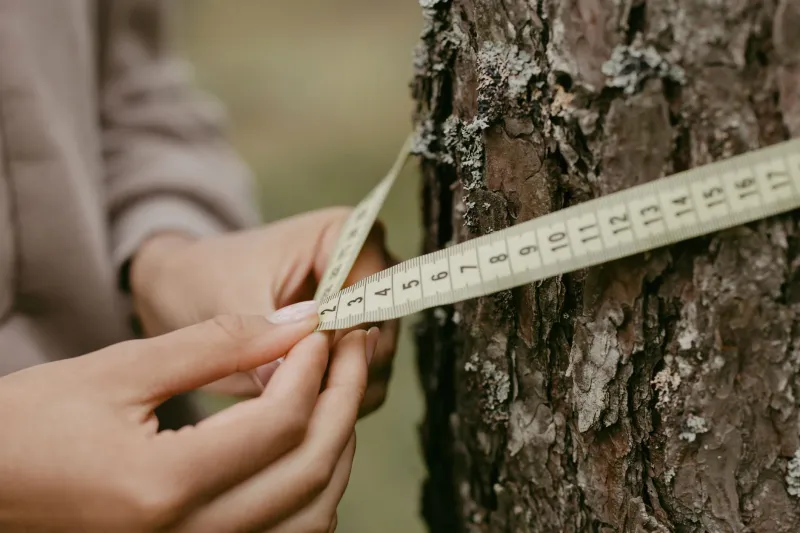
For woodland managers, the practical response is disciplined observation. Candidate survivors should be identified before a stand is overwhelmed, not after the canopy has collapsed. A useful record includes the tree’s location, photographs of the crown and stem, a standardised score for dieback and lesion development, and notes on epicormic growth, collar symptoms and associated regeneration. The same trees should be re-scored after two or three growing seasons. Consistency matters more than complexity: a simple, repeatable protocol is better than an elaborate one applied once.
Survivors should not be treated as trophies. Their value lies in what they may pass on. Where safety allows, they should be retained, especially where they are producing seed. Seed can be collected for testing and, where appropriate, for grafting into archive collections. In the UK, the Living Ash Project and the Future Trees Trust have worked to identify and conserve tolerant ash, while Forest Research has contributed to the scientific understanding of the disease and its inheritance. In Scotland, local records gathered by woodland managers, community groups and recorders can add to that national picture, particularly where they document survivors in native woods rather than planted stands of unknown origin.
Hope with its limits
It would be easy to overstate what survivors can do. Tolerance is rare, and it is not a restoration shortcut. There is no widely available tolerant cultivar that can simply be planted at scale, and moving ash of unknown provenance around the country carries its own risks. The more realistic expectation is that ash will persist in many Scottish woods at lower density: as scattered veterans, as young recruits from surviving parents, and as a species that remains present but no longer dominant.
That is still significant. A wood with some ash is not the same as a wood without it. The slow accumulation of tolerant offspring, where deer pressure and competition allow, could over decades begin to rebuild a more resilient population. But natural regeneration must be protected if that is to happen. Browsing, invasive ground cover and the temptation to tidy away dead or dying trees can all remove the very conditions in which survivors might reproduce.
A realistic future
The search for tolerant ash is not a search for a miracle. It is a long-term conservation commitment built on record-keeping, restraint and repeated visits. The trees that refuse the verdict are not cures for ash dieback, but they are evidence that the species has some capacity to adapt. In a Scottish wood, that is worth watching closely — and worth protecting quietly, without expecting the wood to return to what it was.
Ash dieback will continue to change Scotland’s native woods. The most honest hope is not that ash will escape the disease, but that a minority of trees will carry the species through it. The standing exception deserves our attention precisely because it is exceptional.