Small Architects, Large Signals: Wood Ants in Scotland's Native Woods
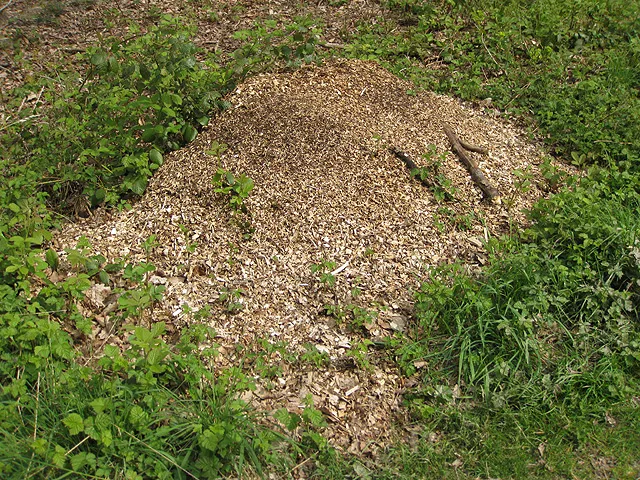
Photo: Pauline Eccles, CC BY-SA 2.0, via Wikimedia Commons
On a still morning in a native pinewood, the first sign may be a low reddish-brown mound rising through heather or blaeberry. It looks like a heap of pine needles and twigs, perhaps a metre across, perhaps much larger. Seen closely, it is busy: workers move along worn trails, carrying resin, fragments of arthropod prey and the sugary honeydew of aphids. The mound is not a random accumulation. It is a built environment, maintained and repaired by thousands of insects, and it offers one of the clearest field signals that a Scottish wood still retains the structure and untidiness that native biodiversity requires.
Three ants, one broad pattern
Scotland's wood ants are not a single entity. The northern wood ant, Formica aquilonia, is strongly associated with native pinewoods and is sometimes called the Scottish wood ant in older literature. The hairy wood ant, Formica lugubris, also occurs in Scotland and may be found in both pine and birch woodland. Distinguishing the two in the field is not always straightforward, particularly for workers seen at a distance, and many recorders sensibly log them as wood ants before seeking expert confirmation.
For the woodland visitor, the important point is the shared ecology. These are large, reddish-and-dark ants that build domed mounds from plant material and soil. They are social insects with a long colony life, and their presence is tied to continuity: mature canopy, varied ground vegetation, deadwood and a reliable supply of invertebrate prey and honeydew. A wood that has been heavily simplified may retain trees but lose the small-scale complexity on which these colonies depend.
Why a mound matters
A wood ant mound is a small-scale ecosystem engineer. Its thatch of conifer needles, twigs and resin absorbs sunlight and sheds water, creating a temperature-regulated interior in which brood can be reared. The ants modify their surroundings by collecting material, moving soil, concentrating nutrients and creating trails. Their activity influences decomposition and soil chemistry around the nest, and their foraging removes large numbers of invertebrates from the woodland floor and canopy.
That makes wood ants a link in several food webs. They are predators and scavengers, and they are themselves prey for birds and mammals. In Scottish native woods, their presence contributes to the diet of woodland birds, including capercaillie chicks, for which insect food is important in early life. The mound is therefore more than a natural history curiosity. It is a node in the wood's economy, connecting canopy, ground layer, soil and vertebrate life.
Reading a mound without disturbing it
Responsible monitoring begins with restraint. Wood ant colonies are sensitive to disturbance, and digging into a mound or poking it with a stick damages the structure that the insects have built and maintained. A volunteer survey should keep a respectful distance and use visible signs rather than contact.
An active mound usually shows fresh thatch on the surface, clear ant traffic on trails, and workers visible in warm, dry weather. Inactive mounds may be overgrown, compacted, moss-covered or without traffic, though a colony can be temporarily quiet in cool conditions. Record the location with a grid reference or GPS point, take a photograph from a fixed position, note the mound's approximate size and the surrounding habitat, and classify it as active, inactive or uncertain. Repeat visits in similar weather are more valuable than a single dramatic encounter.
Surveys are best carried out on warm, dry days when ants are active at the surface. Avoid wet or cold conditions, when colonies are withdrawn and records become misleading. Keep to paths where possible, avoid trampling ground vegetation, and do not remove queens, workers or nest material. The aim is a repeatable record, not a collection.
The untidy dependencies
Wood ants rely on features that woodland management has sometimes regarded as disorder. Deadwood provides foraging surfaces and contributes to the invertebrate community. Canopy cover moderates temperature and supplies honeydew through aphids. Woodland edges and openings create sunny patches where colonies can warm. A wood tidied of fallen timber, scrubbed of scrub and simplified into evenly spaced trees may look managed, but it can be poor habitat for insects that need variety at a small scale.
The quiet argument for wood ants is therefore an argument for retention. Keep some deadwood. Allow resinous conifers and native broadleaves to regenerate where browsing pressure permits. Protect known mounds from forestry operations, track maintenance and excessive public pressure. Monitor with volunteers, but monitor lightly. A mound that persists across years is a modest but meaningful measure of continuity in a Scottish native wood, and a reminder that health is often found in the parts of a forest that are not neat.