Older Than the Map: Six Plants That Test a Wood's Continuity
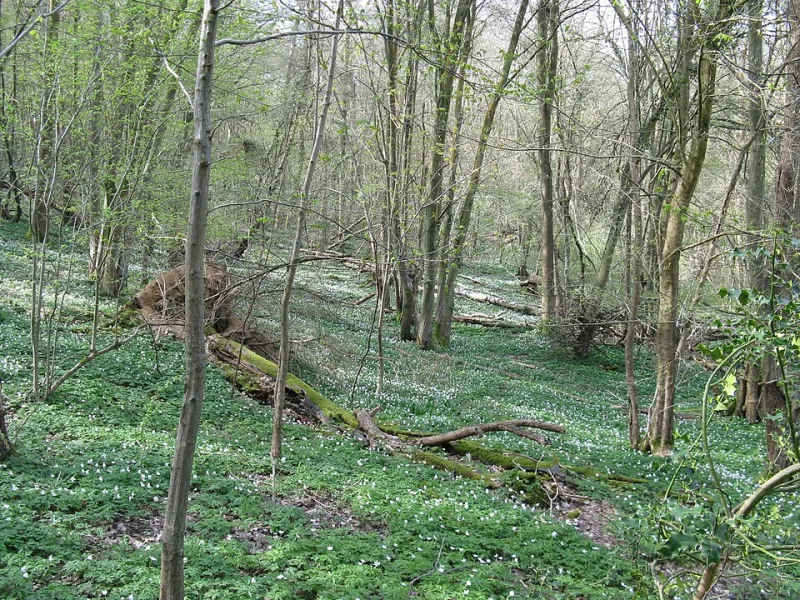
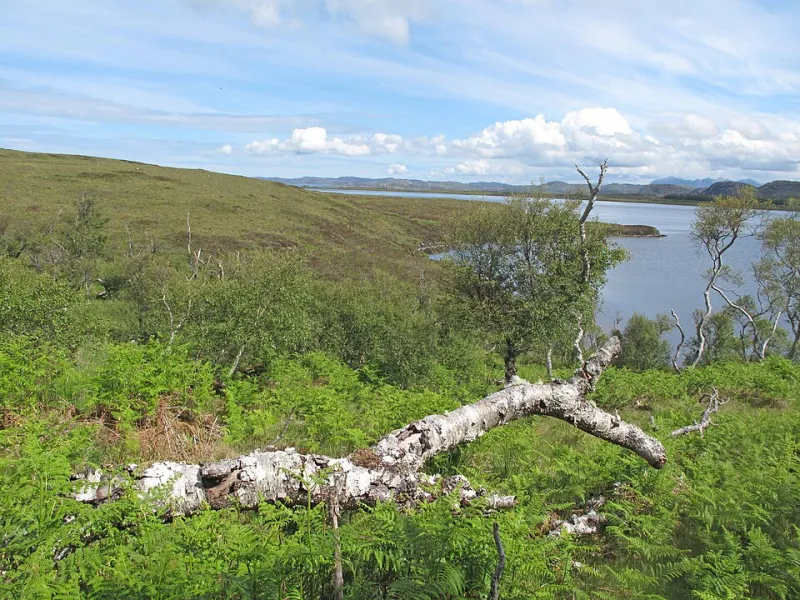
Photo: Dave Spicer , CC BY-SA 2.0, via Wikimedia Commons
Stand in almost any Scottish wood and the trees will tell you how old they are to within a decade or two. What they will not tell you is how long the ground beneath them has been wooded. A plantation of Sitka spruce can stand on soil that has carried a canopy since before the Jacobites; a handsome stand of oak may sit on a field that was ploughed in living memory. To read that deeper history, ecologists stop looking up and start looking down.
What 'ancient' means north of the border
In Scotland, ancient woodland is generally defined as land that has carried continuous woodland cover since around 1750 — the point at which the first reasonably reliable national mapping, Roy's Military Survey, allows us to check. This is a later cut-off than the one used in England, and it reflects the different documentary history rather than any difference in the woods themselves.
The Ancient Woodland Inventory, maintained by NatureScot, maps three broad categories: ancient woodland with a native component, long-established woodland of plantation origin, and more recent woodland. None of these is a statutory designation. Ancient woodland is, however, a material consideration in the planning system, and the inventory is one of the most useful tools available when a wood's future is being decided.
Why some plants make better witnesses than others
The logic behind indicator species is straightforward. A wood that has been continuously wooded for centuries offers a stable, shaded, often nutrient-poor habitat. Plants that specialise in that habitat, disperse slowly, and spread mainly by creeping rhizomes or bulbs rather than by seed have had time to colonise — and, crucially, little opportunity to reach new woods across open farmland.
Three factors underpin the pattern. First, dispersal: many ancient woodland plants produce heavy seed that falls close to the parent, or seed with no great capacity to travel. Second, persistence: clonal species can hold ground for centuries, so a patch of wood anemone may be far older than any individual stem. Third, site conditions: centuries of uninterrupted woodland tend to leave soils undisturbed, with intact structure, fungal communities and a lower nutrient status than land that has been farmed or fertilised.
That third point is the one most often overlooked. Many indicator plants are intolerant of high fertility. Their absence from a former field may say nothing about the age of the wood and everything about the phosphate still sitting in the soil.
It is also worth saying plainly that no single species proves anything. Indicator lists are regional tools, developed largely from English and Welsh data and applied in Scotland with less confidence. Correlations are strong in the aggregate and unreliable in the individual case.
Six plants worth learning
Wood anemone (Anemone nemorosa). A herald of early spring, flowering before the canopy closes, with six white tepals often flushed pink beneath. It spreads by rhizome at a glacial pace, and large drifts suggest long continuity on mildly acidic soils.
Ramsons, or wild garlic (Allium ursinum). Unmistakable by smell. White starry flowers on damp, base-rich ground, often in the company of dog's mercury and bluebell. Its bulb and heavy seed restrict spread, making it a reasonably strong indicator where soils suit it.
Dog's mercury (Mercurialis perennis). Easy to dismiss as a green weed, which is a mistake. It emerges early, spreads by rhizome, and carpets base-rich woods. Where it is abundant, cultivation is unlikely to have occurred within the last two centuries.
Bluebell (Hyacinthoides non-scripta). In Scotland, native bluebell is largely a western and southern plant, and slower to spread than garden-watchers assume. Hybridisation with planted Spanish bluebell is now widespread, so identification of true native stock deserves care.
Herb Paris (Paris quadrifolia). Four leaves, one flower, a single dark berry. Uncommon, fussy about base-rich soils, and a genuinely strong signal of old woodland in the right place.
Sanicle (Sanicula europaea). A modest umbellifer of shady, calcareous ground, with deeply lobed leaves and small white flowerheads. Where it thrives, the wood's history is likely to be long.
There are false friends too. Wood sorrel, foxglove, honeysuckle, bracken and bluebell's garden relatives all turn up readily in secondary woodland. Recording them as indicators inflates the picture and undermines the case for the woods that genuinely deserve it.
Reading absence as evidence
An old wood without wood anemone is not necessarily young. Grazing by deer and sheep can strip ground flora for decades. Coniferisation shades it out. Drainage, fertiliser drift and nutrient deposition from the atmosphere all tilt the sward toward coarse, fast-growing species. Rig-and-furrow earthworks in a wood are a fairly clear statement that the land was once ploughed.
Equally, indicator plants turn up in places that are not woods at all: old hedgerows, churchyards, policy plantings and long-abandoned gardens can all shelter relic populations. A single record therefore tells you about the plant; a pattern of records tells you about the land.
Recording without doing harm
Survey in spring, when ground flora is at its most legible — roughly April to June, before the canopy closes. Walk slowly, note abundance using a simple scale such as DAFOR, and take photographs of anything uncertain rather than digging it up. Negative records are as valuable as positive ones, so note what you looked for and did not find.
Submit records through iRecord or your local biological records centre. Reduce the precision of grid references for scarce or vulnerable species, and never publish locations for anything that might attract collecting or disturbance. Where you can, survey alongside an experienced recorder; the skill is learned, not downloaded.
Why the fragments deserve better
Scotland's ancient woods are not extensive, and many survive as small, isolated pockets in a landscape that has been hard used. Their value is cumulative: undisturbed soils hold carbon, old fungal communities support trees through drought, and the ground flora itself is a reservoir of genetic material that cannot be recreated on a human timescale.
They are also, quietly, the best seed source we have for the expansion of native woodland that policy now asks for. A wood that has survived two and a half centuries of grazing, felling and replanting is not merely a relic. It is a working example of what the next three centuries might look like.