Five Quiet Giants of the Winter Wood: Native Trees to Recognise on a Scottish Walk
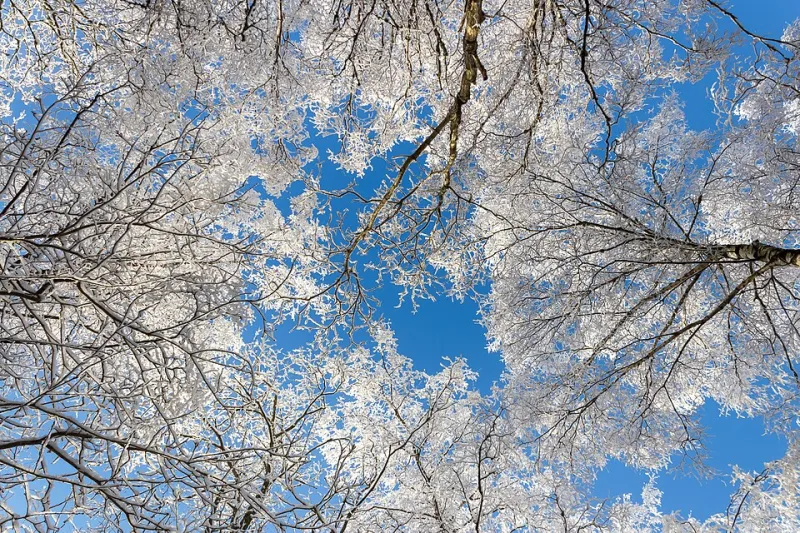
Photo: W.carter, CC BY-SA 4.0, via Wikimedia Commons
Winter 2026 is a good time to look again at Scotland's native trees. With leaves gone from the broadleaves, the woodland shows its architecture: the angle of a branch, the colour of bark, the shape of a bud and the pattern of a crown against the sky. For anyone learning outdoor skills, these details turn a familiar walk into a study in recognition.
The five trees below are not a ranking. They are among the quiet constants of Scottish woodlands, each playing a different ecological role. Learning to spot them in winter makes it easier to read a wood through the colder months, when much of its life is hidden but not absent.
Scots pine (Pinus sylvestris)
Scots pine is the evergreen anchor of the Caledonian pinewoods, though it is also planted widely elsewhere. In winter, look for bark that shifts with age: grey-brown and scaly lower down, becoming warmer orange-red and flaking higher on the trunk. The needles are borne in pairs and remain through the year. The crown is often irregular, with a flat-topped or layered silhouette rather than the neat cone of a spruce.
Ecologically, Scots pine is a keystone in the native pinewoods of the Highlands. Its seeds and shelter support red squirrels, crossbills and other woodland birds, while its deadwood and old trunks provide habitat for insects and fungi. Stands of old pine are also important for lichens and for the specialised invertebrates associated with native pinewood. Winter is a good season to admire the shape of these trees without the distraction of summer growth.
Rowan (Sorbus aucuparia)
Rowan is a smaller tree, often found at woodland edges, in glens and on rocky ground. In winter, its bark is smooth and grey-brown, with darker lenticels breaking the surface. The buds are dark, sometimes almost purple-black, and the twigs are slender. Clusters of bright red berries may still persist into early winter, though birds soon strip them. The overall silhouette is neat and upright, often with a rather open crown.
Rowan earns its place through its flowers and fruit. In spring and summer, its blossom supports pollinators; in autumn and winter, its berries are food for thrushes and other birds. It is a tree of edges and transitions, which makes it a useful species to recognise when reading the structure of a woodland. A rowan on a crag or beside a track can be a small landmark in the landscape.
Birch (Betula pendula and Betula pubescens)
Silver birch and downy birch are both native and both common in Scotland. In winter, silver birch usually shows pale, papery bark and fine, pendulous twigs. Downy birch can be less sharply pendulous and its young twigs are often softly hairy. The buds are small and pointed. Against a grey sky, birch woodland has a distinctive airy texture, with many slender trunks creating a haze of fine branches.
Birch is a pioneer, quick to colonise open ground and often the first tree to establish after disturbance. Its bark supports specialised lichens and insects, and its seeds feed small birds. Birch woodland can be short-lived compared with pinewood, but it plays an important role in soil development and in creating the conditions for other trees to follow. For outdoor learning, birch is a good starting point because its winter silhouette is so recognisable.
Hazel (Corylus avellana)
Hazel is often multi-stemmed, with smooth, brownish-grey bark and a rounded outline. In winter, its catkins begin to lengthen, and the buds are rounded and green-brown rather than sharply pointed. The twigs are flexible and slightly zigzagged. A hazel stool can look like a cluster of stems rather than a single trunk, a clue to its history of coppicing in many parts of Britain.
Hazel is valuable for wildlife. Its catkins provide early pollen, its nuts feed birds and small mammals, and its dense growth offers cover. In Scotland, hazel often grows in mixed woodland and on slopes, sometimes with oak and birch. The tree is also part of a long cultural history of coppice management, which shaped many woods over centuries. Recognising hazel in winter helps explain why some woodlands have such a bushy, multi-stemmed structure.
Aspen (Populus tremula)
Aspen is less common than birch or rowan, but it is memorable once learned. Its bark is pale grey-green and often marked with diamond-shaped lenticels. The buds are dark and slightly sticky, and the twigs are slender. In winter, aspen can be difficult to separate from other poplars at a distance, but its pale bark and tendency to form clonal stands are useful clues. Look for groups of similar trunks, often on damp or upland ground.
Aspen is ecologically important out of proportion to its frequency. It supports a range of insects and lichens, and its leaves are food for several specialised species. Because it can spread by root suckers, it may form small groves rather than widely scattered trees. For anyone interested in woodland biodiversity, finding aspen is a reminder that rarity and ecological value do not always coincide.
Reading the winter wood
Winter identification is not about memorising every detail. It is about building a habit of looking. Start with the bark, then the buds, then the shape of the tree against the sky. Use a hand lens for twigs and buds if you have one. A simple pocket guide is useful, but repetition matters more than equipment. The more often you compare a birch trunk with a rowan, or a hazel stool with a young aspen, the more quickly the differences become familiar.
For outdoor learning, winter walks offer a quieter kind of attention. There are fewer distractions, and the structure of the wood is easier to see. Teachers and group leaders can use these five trees to discuss ecological roles as well as identification: what feeds on what, which trees arrive first after disturbance, and why deadwood and old trees matter. Coille Alba's approach is to encourage that curiosity while asking visitors to tread lightly and leave the woodland as they find it.
A winter woodland may look dormant, but it is still a place of process and preparation. Learning five native trees is a small step towards reading those processes. It is also a good reason to go outside in 2026, even when the weather is grey and the branches are bare.