The Slow Inheritance: Natural Colonisation and the Patience of Scottish Woods
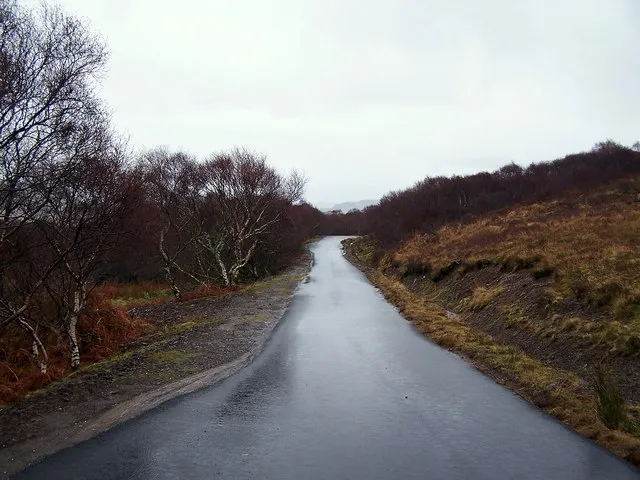
Photo: Richard Dorrell, CC BY-SA 2.0, via Wikimedia Commons
Leave a field at the edge of an old wood and, in time, something will happen. Birch may arrive first, then willow, rowan, perhaps oak carried by a jay. This is natural colonisation: woodland assembling itself from nearby seed sources rather than from a planting team. It is an attractive idea, and not only because it is cheap. It promises a wood with local genetic character, a structure that emerges from site conditions, and a process that looks more like ecology than engineering. But the science is less tidy than the promise. Natural colonisation is not a single event but a sequence of filters—dispersal, establishment, survival and spread—and in Scotland's fragmented landscapes each filter can fail.
The reach of a seed
Every wood casts a seed shadow. For light-seeded species such as birch and willow, that shadow may extend hundreds of metres on a favourable wind. For heavy-seeded species—oak, hazel, large-seeded shrubs—dispersal depends on animals: jays, squirrels, mice, birds. A source wood a kilometre away is not the same as a source wood a hundred metres away. Scotland's native woods are often small and isolated, separated by improved pasture, conifer plantations or moorland. In such a landscape, natural colonisation may begin with birch scrub but stall before oak or hazel arrive. The result can be a wood that is real, but narrow in composition. Distance is not the only limit. Shelterbelts, hedgerows and riparian corridors can act as stepping stones; a single mature rowan in a hedge can seed a whole field.
Soil is not neutral ground
Soil conditions decide which arrivals stay. Native woodland on poor, damp or shallow soils often regenerates readily; improved pasture, with its high nutrient status and competitive grasses, can resist tree establishment for years. Ploughing, drainage and fertiliser applications leave a legacy that favours rank vegetation over tree seedlings. The fungal community matters too: many trees depend on mycorrhizal associations, and these partnerships may be absent or impoverished in long-cleared ground. Natural colonisation is therefore not simply a matter of seed arriving. It is a matter of the site being ready to receive it. Where soil is too rich, scarification or a period of grazing management may be needed; where it is too dry or too exposed, the process may be slow or patchy.
Herbivores hold the line
The most familiar constraint is browsing. Red deer, roe deer, sheep and, in places, feral goats can remove seedlings faster than they establish. A natural colonisation project without herbivore management is often an experiment in feeding herbivores. Fencing can work, but it is expensive, visually intrusive and requires maintenance; culling may be necessary where deer densities are high. The point is not that natural colonisation always fails under browsing, but that it cannot be assumed to succeed without it. A wood that plants itself is not a wood that protects itself. The decision to let nature take its course still involves a decision about how many mouths the land will support.
Time, and what counts as a wood
Natural colonisation is slow. Birch may seed within a decade or two of a seed source being present, but oak and other late-successional species may take far longer. The first phase is often dense scrub—valuable for birds and insects, but not the diverse woodland that policy targets may imagine. Structure, deadwood and shade develop over decades. This raises a question of metrics. A planted wood can be counted in hectares from the day the trees go in; a naturally colonising wood may take years to register as woodland at all. If targets reward immediate area, natural colonisation can look like delay. If targets reward resilience and local provenance, it may look like value.
A complement, not a substitute
Natural colonisation works best where seed sources are close, herbivore pressure is manageable, soils are not heavily improved and time is available. It is less suited to isolated sites, to landscapes where specific species are required, or to situations where woodland cover is needed quickly for water management or shelter. In practice, the choice is rarely binary. A site might be left to colonise naturally at the edges while planting is used to introduce missing species or to establish a nucleus. The two approaches can sit within one plan. What matters is that natural colonisation is treated as a process with requirements, not as a saving. It needs survey, monitoring and, often, intervention—just of a different kind.
Scotland's woodland expansion will not be achieved by any single method. Planting remains essential where seed sources are absent or targets are urgent. But natural colonisation offers something planting cannot: a wood that carries the genetic and ecological signature of its place, assembled by processes we did not design. The case for it is not that it is cheap. It is that it is patient. And patience, in a landscape that has been shaped by grazing, drainage and clearance, is a resource worth planning for.