Silence and Signal: Reading Scotland's Native Woods by Ear
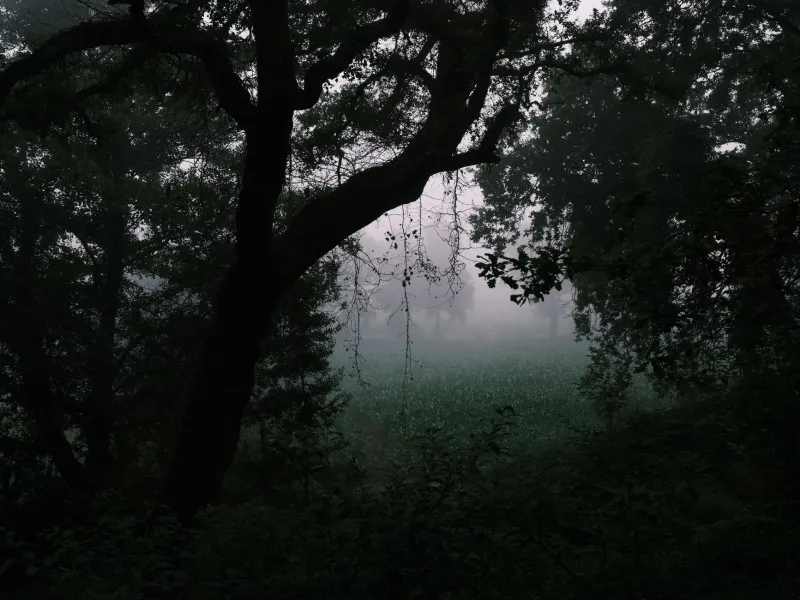
At first light in an Argyll oakwood, the sound arrives in layers. A robin opens the sequence, then a blackbird, then the dry rattle of a wood warbler. Beneath them, the low hum of insects and the occasional creak of oak limbs fill the spaces between song. By six o'clock, the wood is at its most audible — and, for an ecologist, at its most informative.
Yet the relationship between sound and woodland health is not straightforward. A loud chorus is not automatically a healthy one, and a quiet wood is not necessarily a damaged one. Acoustic monitoring offers a powerful way to listen at scale, but it works best when paired with patient field observation and a clear sense of its limits.
What soundscape ecology listens for
Soundscape ecology treats the sounds of a place as a whole. It separates biophony — the sounds of living things — from geophony, which includes wind, water and rain, and anthrophony, the noise of human activity. In Scottish native woods, the balance between these three is itself a kind of data. A woodland close to a busy road may have a rich bird community that is partly masked by traffic. A remote wood may sound sparse simply because its birds are dispersed. Neither observation, on its own, tells you whether the wood is thriving.
The acoustic character of a wood also reflects its structure. Ancient oakwoods with a complex understorey tend to support a layered chorus: canopy singers, mid-storey species and ground-dwelling birds all occupy different frequencies and heights. Even-aged plantations, by contrast, often produce a thinner sound. That difference is not a reliable index of biodiversity, but it is a useful prompt for further investigation.
Recorders in the canopy
Autonomous acoustic recorders have changed the scale at which listening can happen. These small, weatherproof units can be left in a wood for weeks or months, recording at scheduled intervals. A single unit may capture thousands of hours of audio. Software can then identify species from their calls, or calculate acoustic indices such as the Acoustic Complexity Index, which summarises the variation and intensity of sound across a recording.
These tools are attractive because they are standardised and repeatable. A recorder does not get tired, and it can sample at dawn every day for a season. But an index is not a direct measure of biodiversity. It is a proxy, and proxies need ground-truthing. A recorder cannot tell a rich insect assemblage from a noisy stream unless the signal is analysed with care. Machine-learning classifiers, meanwhile, are only as good as the training data behind them, and many Scottish species are under-represented in global libraries.
A chorus in context
Woodland type matters. In Atlantic oakwoods, the dawn chorus is often layered: redstarts and wood warblers sing from the canopy, blackcaps from the mid-storey, and tree pipits from the edges. In Caledonian pinewoods, the chorus is thinner but no less telling. Crossbills call overhead, crested tits forage in the canopy, and capercaillie — where they persist — produce low-frequency pulses that carry through the trees in early spring. Upland birchwoods support willow warblers and tree pipits, while wet woodlands of alder and willow may host fewer species but a distinctive insect hum in summer.
A healthy dawn chorus is therefore not a single sound. It is a sound that fits the wood. The practical question is whether the acoustic community matches what the habitat could support. That requires local knowledge, repeated visits and a willingness to be surprised by quiet.
Training your ears
Listening is a skill, and it improves with practice. Begin with a short, repeated walk: the same route, at the same time, once a week. Dawn is best, but dusk can be revealing. Stand still for five minutes and try to separate the sound into layers — canopy, understorey, ground. Learn ten local songs well rather than a hundred poorly. A phone recording is useful, but note the weather, the date and the time. Playback should be avoided: it can disturb birds and skew your results.
It also helps to listen for absence. Which species did you expect to hear but did not? Was the wood quiet because it was midday in July, or because the understorey has been grazed out? Those questions are more valuable than a simple count of songs.
The limits of listening
Sound is not a complete census. Many species are silent or quiet, and detection varies with season, weather and observer. Acoustic indices can be misleading if used without calibration. Anthropogenic noise masks calls and can alter bird behaviour. And silence has many meanings: winter woods are naturally quiet, midday in summer can be still, and a wood that is silent in spring may be genuinely impoverished.
Acoustic monitoring is a tool, not a verdict. It is most powerful when it is combined with vegetation surveys, invertebrate sampling and the kind of slow observation that a recorder cannot replace. The ear is a fine instrument, but it is not a substitute for the whole body of evidence.
A listening practice
None of this diminishes the value of listening. It simply asks for humility. In Scotland's native woods, sound is one of the most accessible ways to observe change — but it is most useful when combined with looking, recording and returning. The wood is always speaking; our task is to learn the grammar.