A Rotation, Not a Relic: Coppice Science in Scottish Native Woods
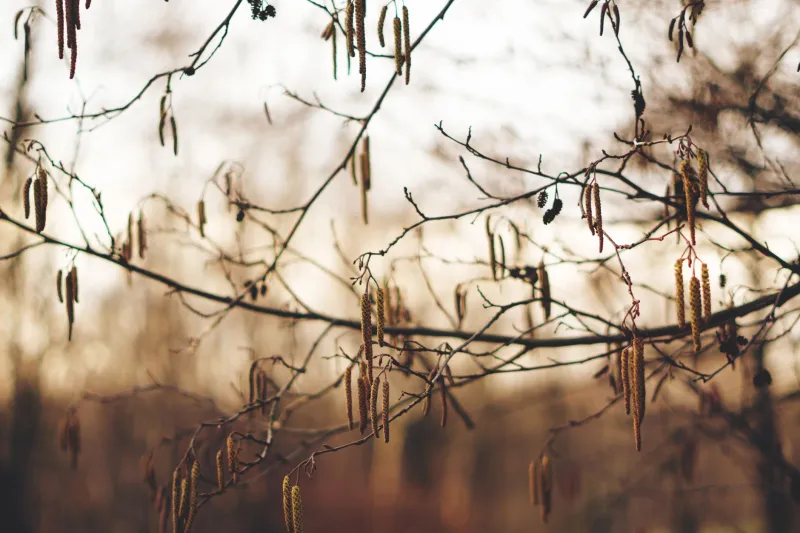
Coppicing carries a strong visual memory in Britain: stools of hazel, straight poles stacked for hurdles, the smell of freshly cut wood in winter. That image can make the practice seem like a conservation gesture rather than a working method. In Scottish native woods, however, the more useful question is not whether coppicing looks traditional, but whether a planned rotation can deliver measurable ecological outcomes that an unmanaged stand cannot.
The answer is conditional. Rotational cutting is neither a universal remedy nor a harmless exercise in nostalgia. It changes light, soil disturbance, browsing exposure and stand structure, and those changes can be beneficial or damaging depending on species, site and timing. Coppicing deserves to be assessed as a management intervention, with clear objectives and honest monitoring.
What the cut actually does
Coppicing removes stems close to the ground so that new shoots grow from dormant buds on the stool. Because the root system remains intact, regrowth can be rapid. Stored carbohydrates support the first flush of shoots, giving coppice a head start that a seedling does not enjoy. The result is a cycle of young, vigorously growing stems rather than a single aged trunk.
Different native species respond in different ways. Hazel is the familiar example, producing multiple stems from a stool and tolerating relatively short rotations. Oak can be coppiced, though it is often managed with standards—trees left to grow through the cycle—so that both timber and underwood are produced. Willow and alder suit wet ground and can regenerate quickly, but they also illustrate the risks: soft ground is easily poached by machinery, and wet sites can be sensitive to disturbance.
The ecological effect is chiefly about light. A closed canopy casts deep shade; a recently cut coupe allows sunlight to reach the field layer. That can favour woodland plants that persist in seed banks or as suppressed remnants, and it can create structural diversity across a wood. Invertebrates associated with young growth, flowers and deadwood may benefit, as may birds that use dense regrowth for nesting or foraging. None of this is automatic, and none of it justifies cutting everywhere.
Reading a coupe: signs of good timing
A well-timed coupe is not simply one that has reached a predetermined age. It is one where the decision fits the stand and the site. Before cutting, managers should be able to describe what the intervention is intended to achieve: more light in the field layer, renewed hazel structure, a mix of age classes, or the continuation of a known coppice tradition with ecological value.
Useful signs include a canopy that has closed and suppressed the ground flora, an absence of young growth in the understorey, and a stand dominated by a single age class. The presence of coppice stools with old cut surfaces can indicate a history of rotational management, though it does not prove that cutting remains appropriate. Deer pressure must be assessed before the saw is used. If browsing is heavy, regrowth may be stripped before it can escape the reach of herbivores.
After cutting, the signs of success are equally practical. Stools should produce vigorous shoots; cut surfaces should not be torn or split; and regrowth should be tall enough to escape browsing within a reasonable period. A coupe that is too large, too exposed or too heavily browsed will show its problems quickly. Brash can be used to protect stools and reduce browsing in the short term, but it is not a substitute for understanding the pressure on the site.
The risks that decide the outcome
Browsing is the most immediate risk. Roe deer and red deer can prevent coppice regrowth from developing, and the effect is often uneven across a wood. Fencing can be justified where the objective is clear and the site is suitable, but it carries costs and maintenance burdens. The better approach is to monitor browsing and adjust the size and frequency of cutting, rather than assuming that protection alone will solve the problem.
Disease and site damage also matter. Ash is not a sensible coppice candidate where ash dieback is present, and any species with known health problems should be assessed before a rotation is planned. Machinery can compact soils and damage roots, particularly on wet ground. Ancient woodland soils are slow to recover from disturbance, so coupes should be laid out to limit damage and to leave refuges for species that need continuity.
Climate adds uncertainty. Late frosts can damage new shoots, and drought can weaken regrowth. Coppicing may buy time for light-demanding species under pressure, but it cannot guarantee their persistence if wider conditions continue to change. That is why rotational management should be treated as an experiment with records, not as a ritual repeated because it was once common.
Where controlled cutting makes sense
Coppicing is most defensible on selected sites with a clear management plan and a named conservation objective. Community woods, reserve woodlands and sites with documented coppice history may be suitable, especially where the alternative is a uniformly shaded stand with little structural variety. The scale should be modest, the coupes should be dispersed, and the rotation should reflect the species and the site rather than a fixed prescription.
A measured case for coppice rests on monitoring. Before cutting, record the ground flora, browsing pressure, stand structure and regeneration. After cutting, compare the coupe with uncut control areas. If the expected light-demanding species do not respond, or if browsing overwhelms regrowth, the plan should change. That is not a weakness in the approach; it is the difference between heritage gesture and woodland management.
Coppicing can still teach Scotland's native woods something useful: that light is a resource, that structure is an ecological variable, and that a wood is not always best left untouched. The case is strongest where rotational cutting is applied deliberately, at a scale the site can absorb, and with the humility to measure what follows.